Letitia Blennerhassett
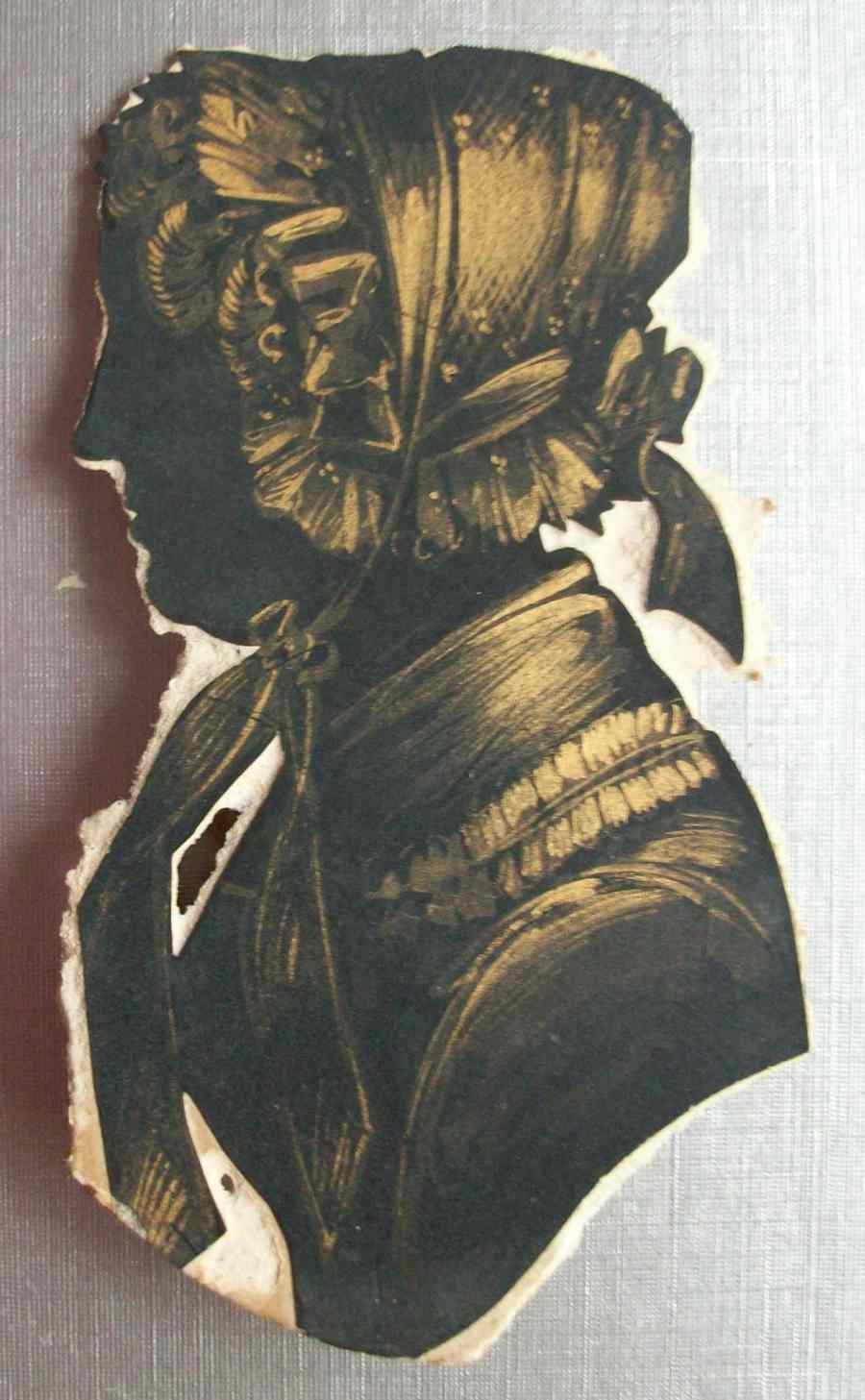
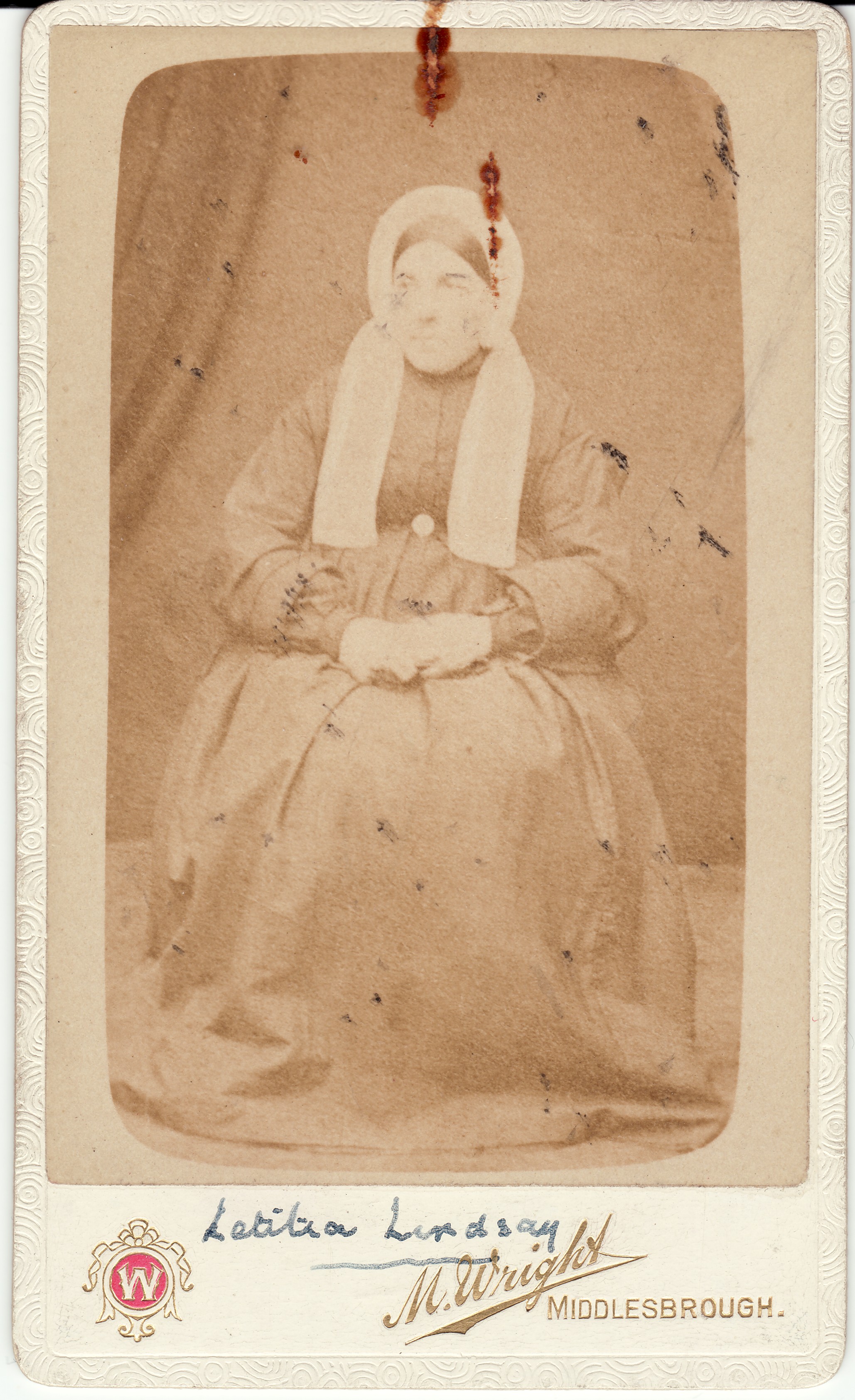
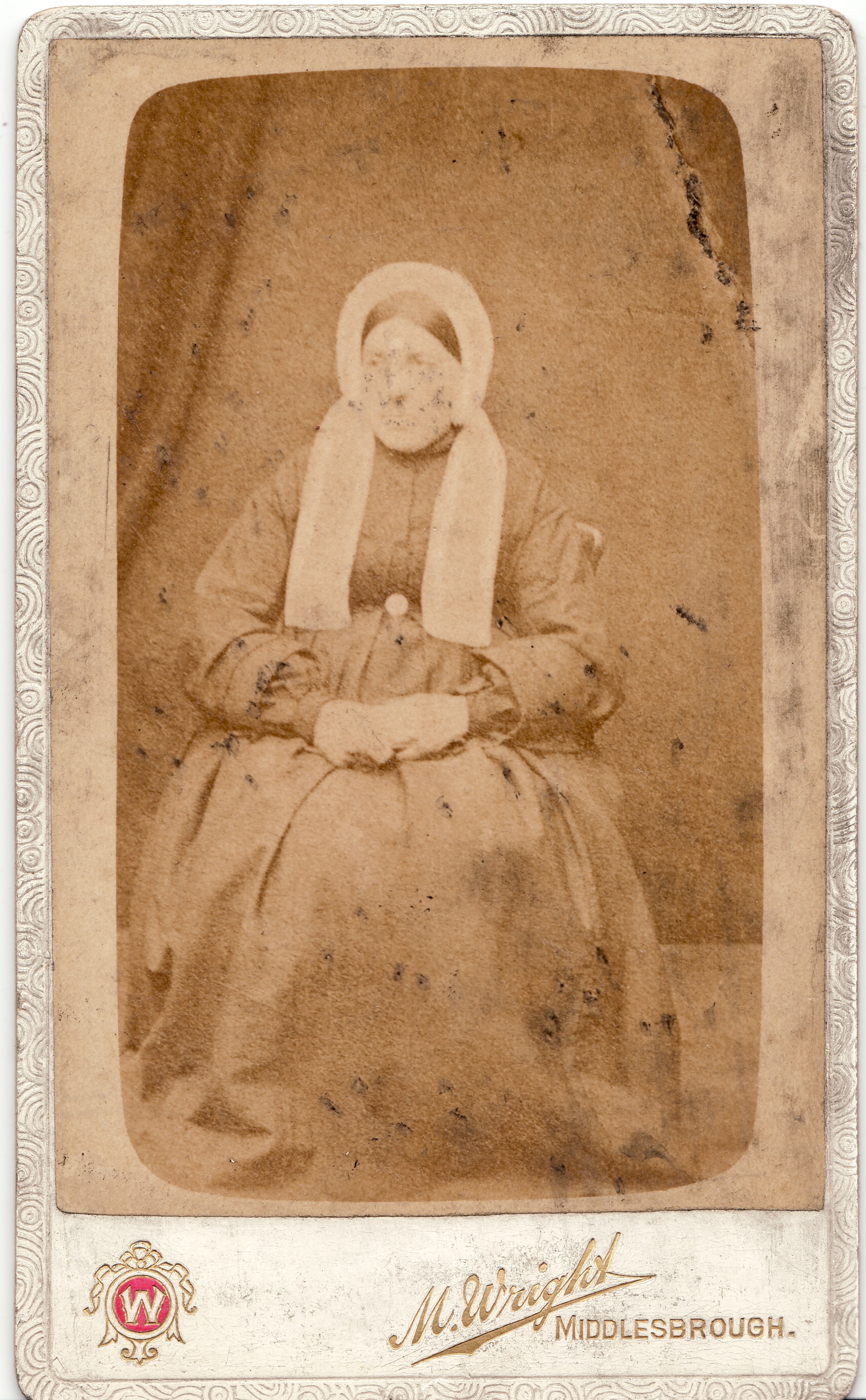
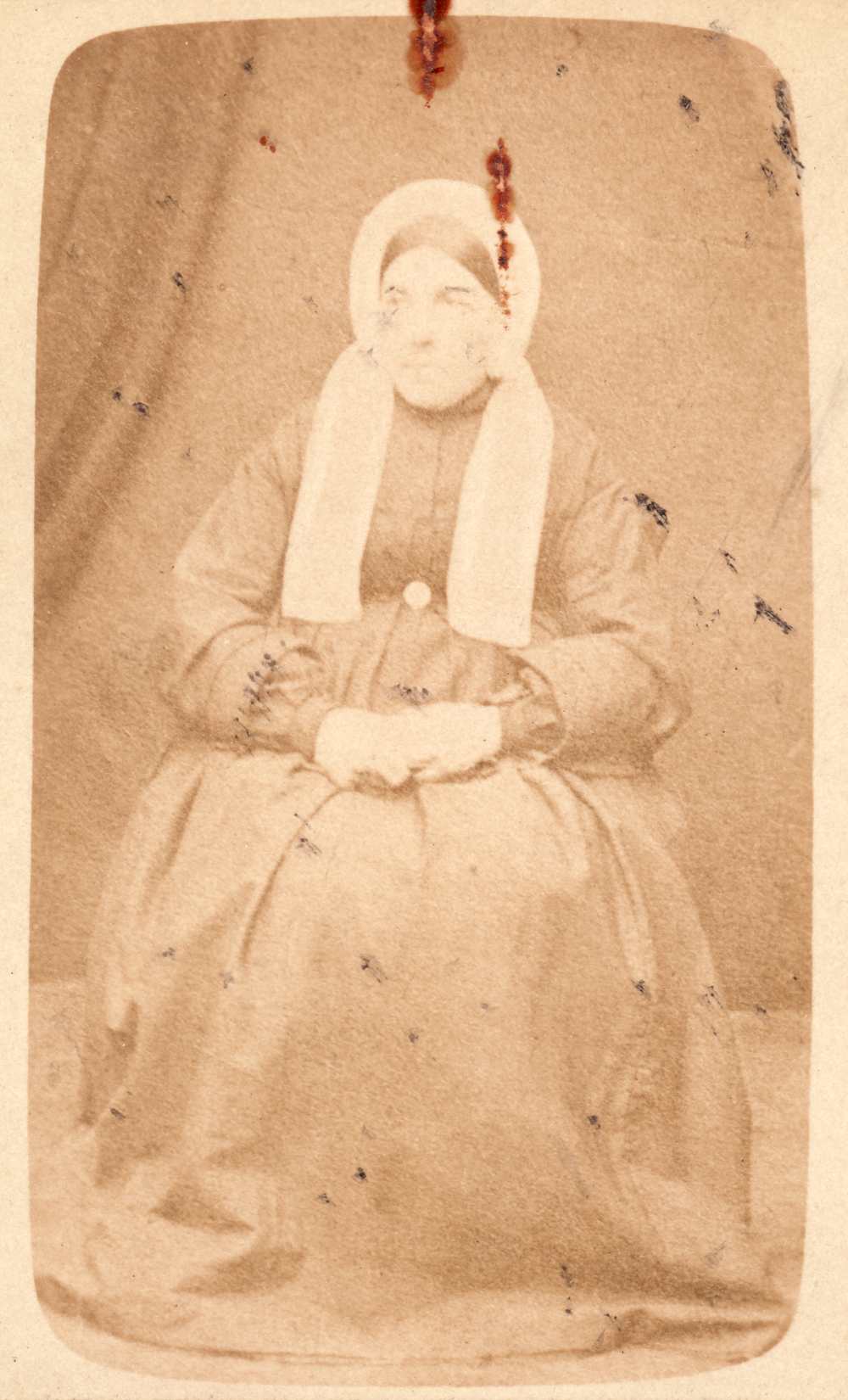
Letitia Blennerhassett (bapt 1780) in old age.
Photo probably after she was widowed in 1862,
before her death in 1876.
See
larger
and
full size
(and
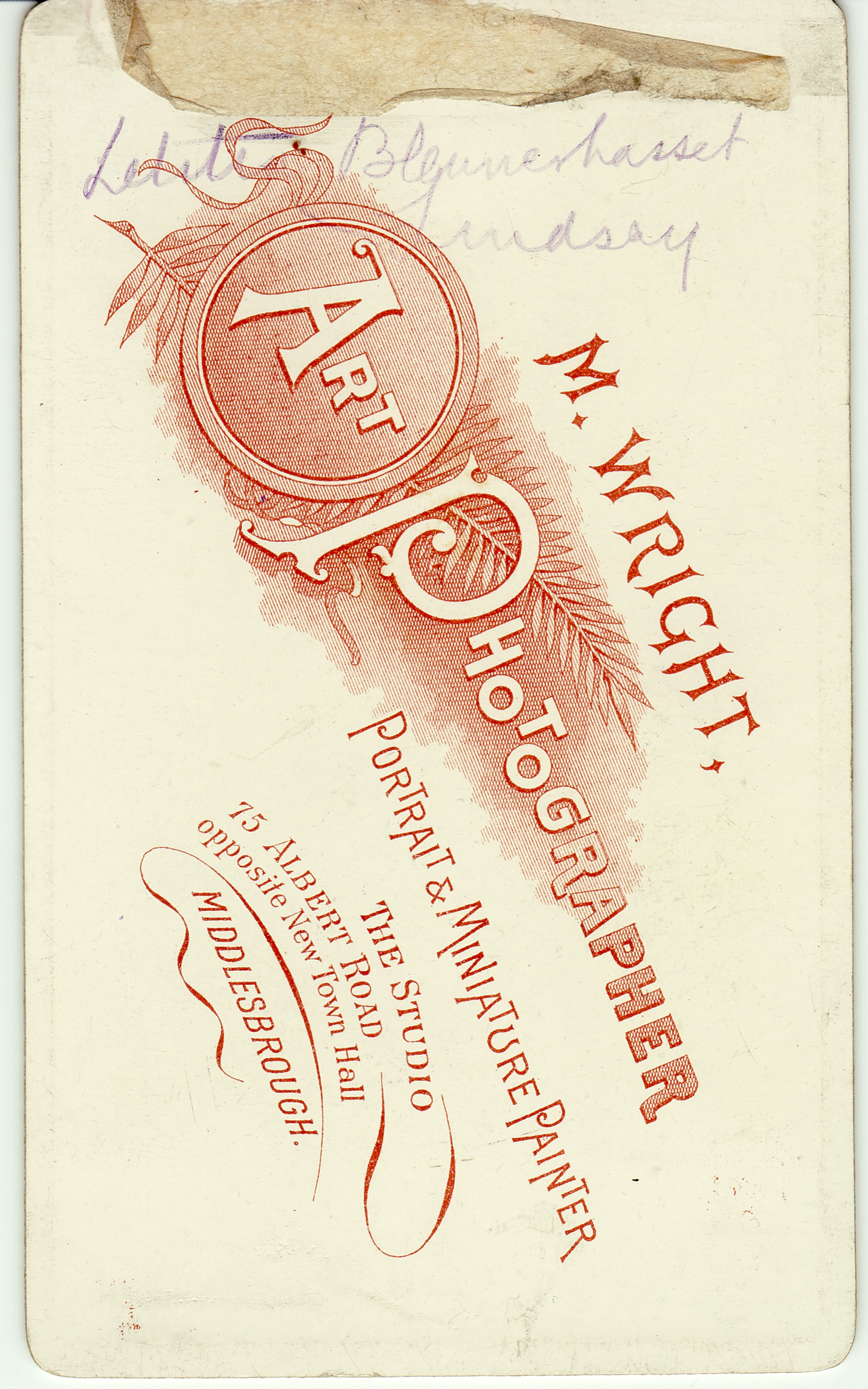
back).
This copy confirms this is Letitia Blennerhassett.
See
another copy of this picture
(and
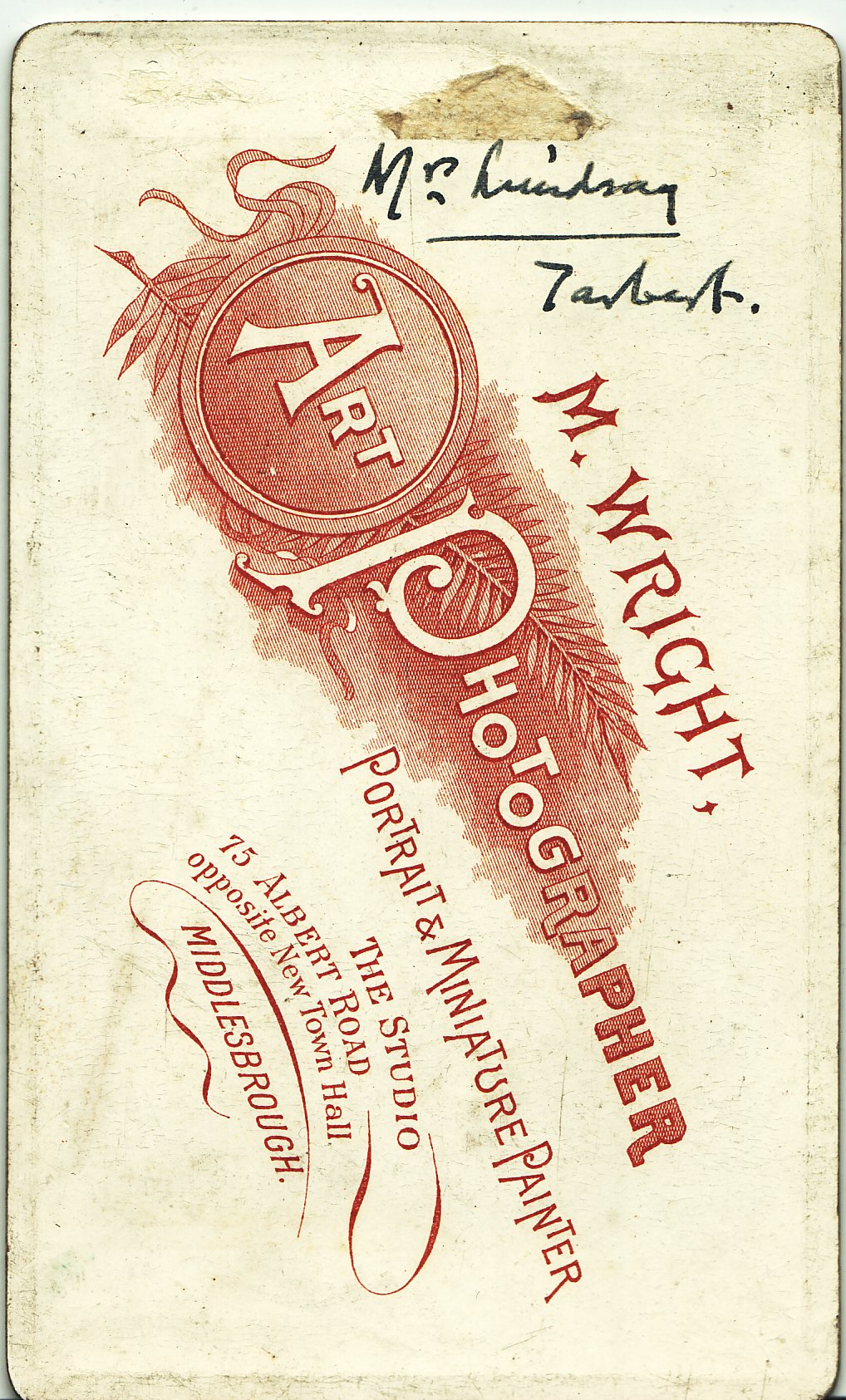
back).
- Both copies of this old (pre-1876) photo are stuck onto a new (1890s or later) card:
-
Both copies of this photo are stuck onto a card
from M. Wright, photographer, 75 Albert Rd,
Middlesbrough,
North Yorkshire.
-
This means nothing.
The family tree researcher
Rev. Thomas Enraght Lindsay
was based at Middlesbrough as at 1896.
He clearly took old pictures
(or new copies he had made of old pictures)
and stuck them onto spare cards that he had.
- The card seems to be
from the 1890s or later:
Letitia Blennerhassett
(see
here
and
here
and
here),
descendant of
Edward III,
born Co.Kerry,
bapt 10th June 1780,
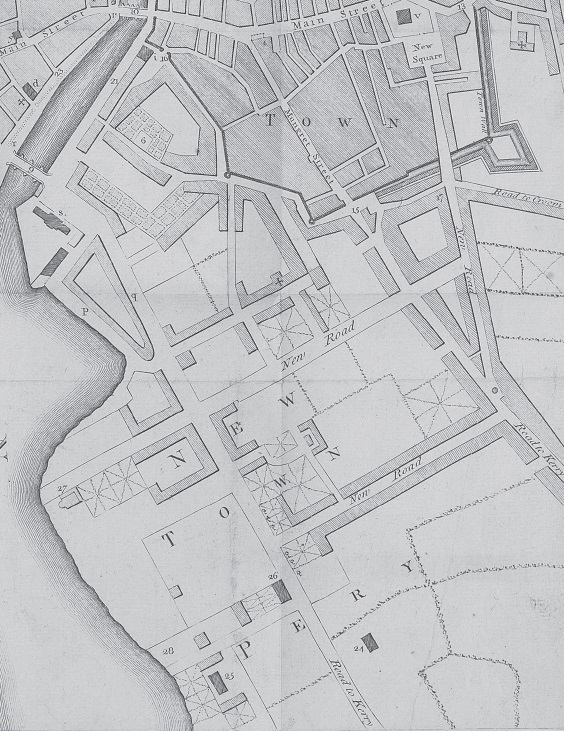
would have grown up at the Rectory,
St.John's church, Tralee,
where her father was Rector 1765 to 1803,
mar 1stly,
settlement in
[Deed dated 29th June 1799],
to
Richard Ponsonby
[descendant of Edward I]
and had issue,
he died 20 Apr 1811,
she went to Limerick,
she quickly re-married,
her young children by him
appear to have remained with Ponsonby relations rather than with her,
she is listed as Letitia Ponsonby, Church of Ireland, at 2nd mar,
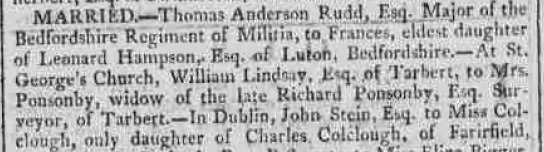
mar 2ndly, Wed 10 July 1811
[St.Michael's parish records, Limerick]
to William Lindsay [bapt 19 Mar 1790]
and had issue,
he was age 21, she was age 31,
see [Limerick Gazette, Fri 12 July 1811],
see [Clare Journal, Monday 15th July 1811],
see Walker's Hibernian Magazine,
July 1811, p.392,
[NLI] Ir 05 w 1,
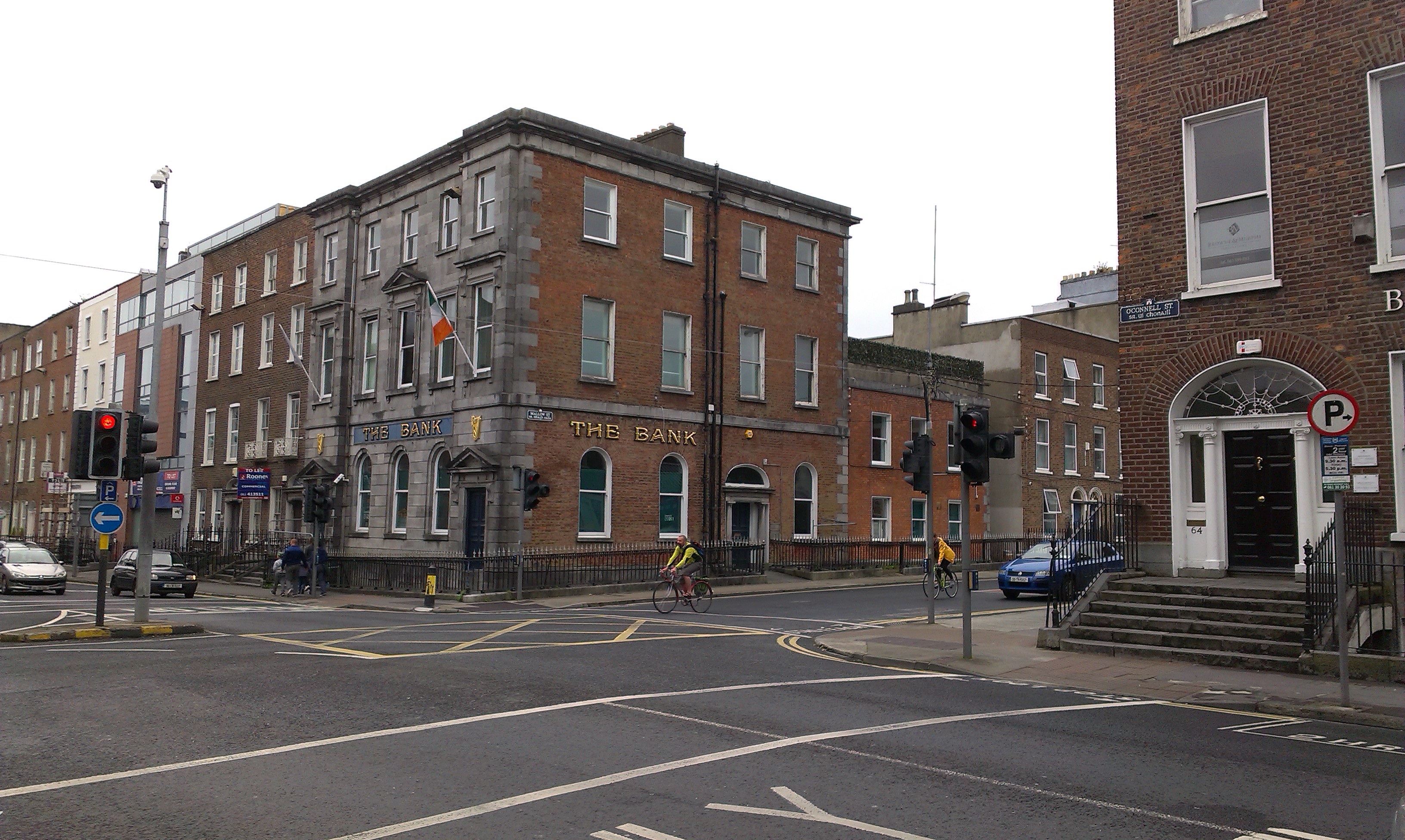
in fact they married at
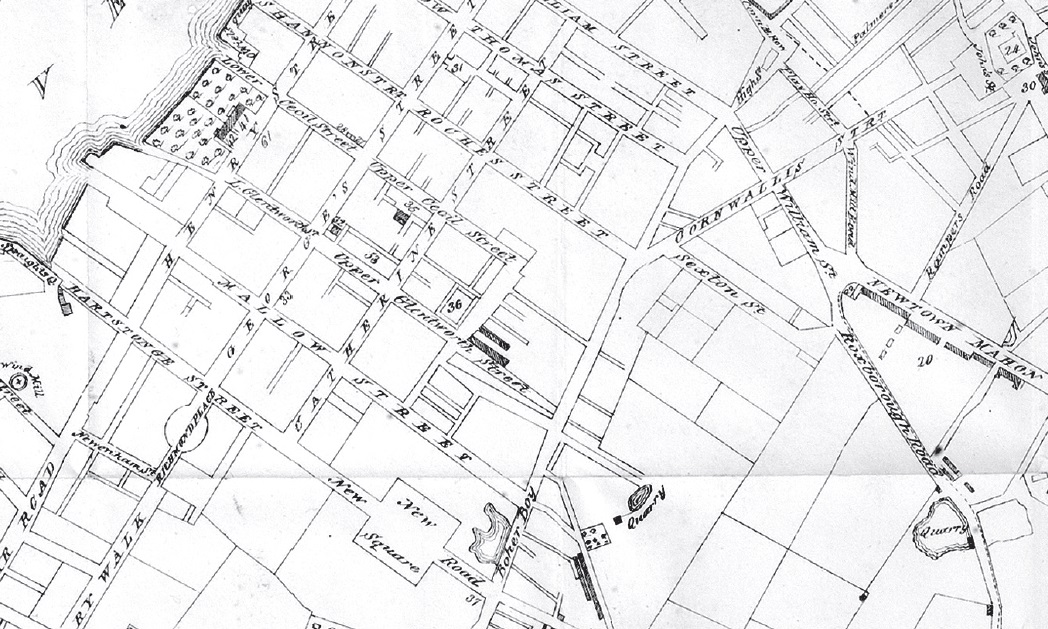
St.George's church
(Church of Ireland), George St (later O'Connell St), Limerick,
St.George's was the church later replaced (in a different location) by
St.Michael's church
(also here),
[Joseph Lindsay, 1897]
says they married
"at a church called the Round Church. It was in the middle of a green field
and the
Provincial Bank of Limerick is now in its place.
The whole place is now streets",
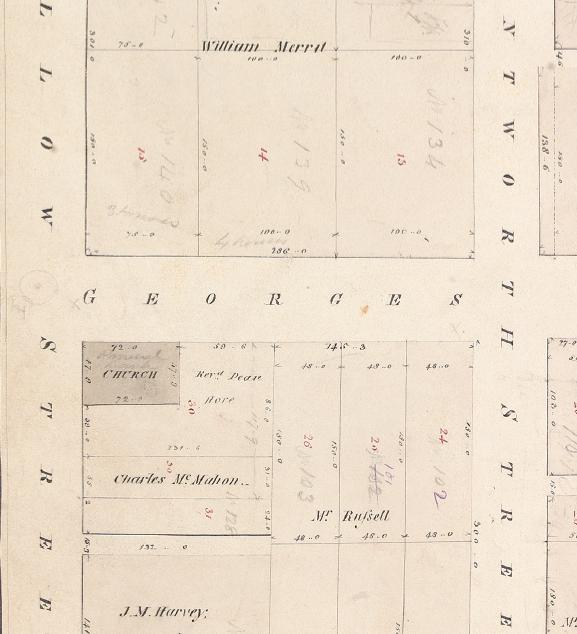
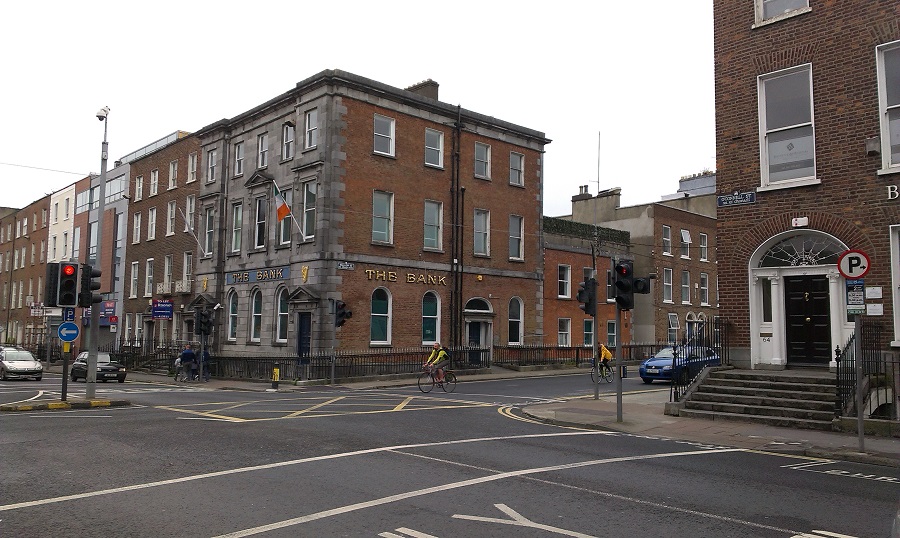
the Provincial Bank
was built at 63 George St, Limerick,
[Limerick Evening Post and Clare Sentinel, 9 Sept 1831]
says:
"St. George's Church, Limerick, is to be forthwith taken down, and on its site will be erected an edifice for transacting the business of the Provincial Bank.",
the bank building is now "The Bank" Bar and Restaurant, 63 O'Connell Street
(see street view).
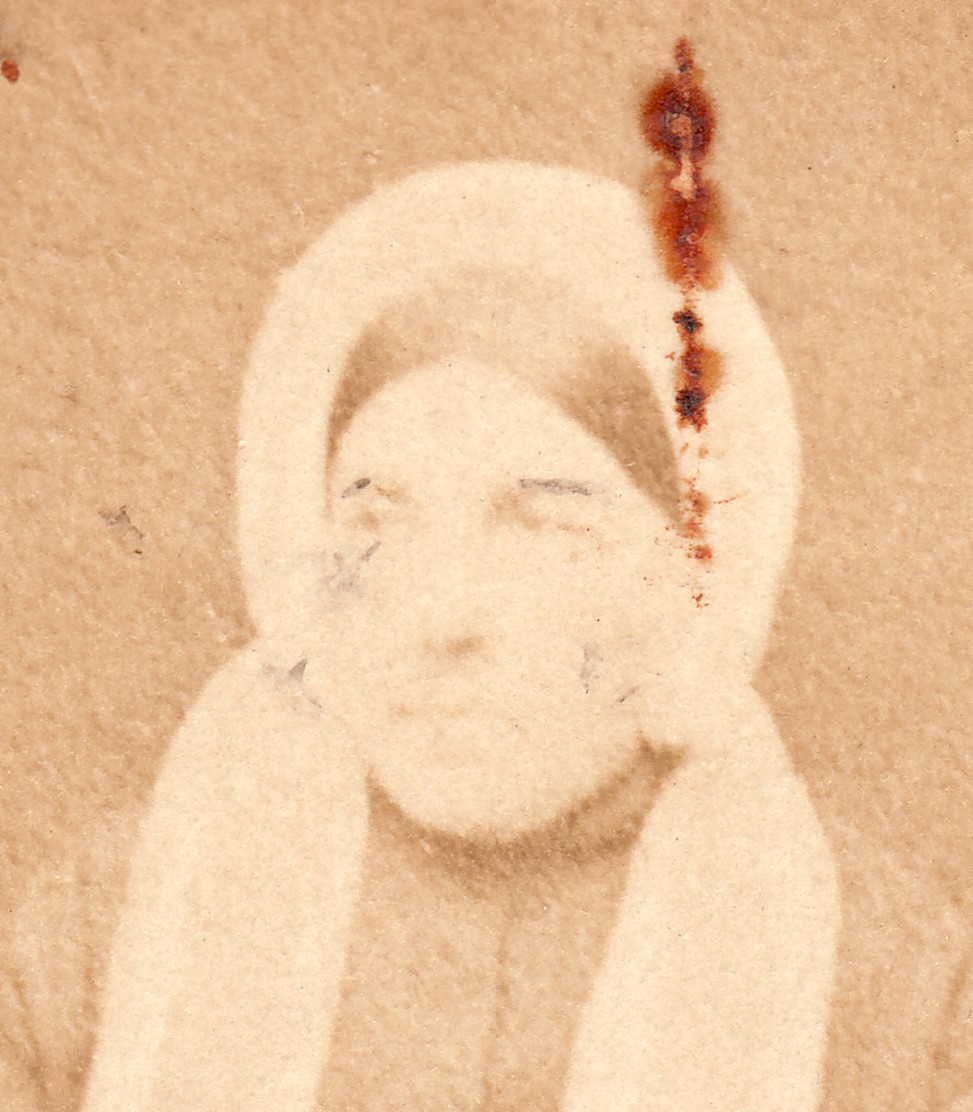
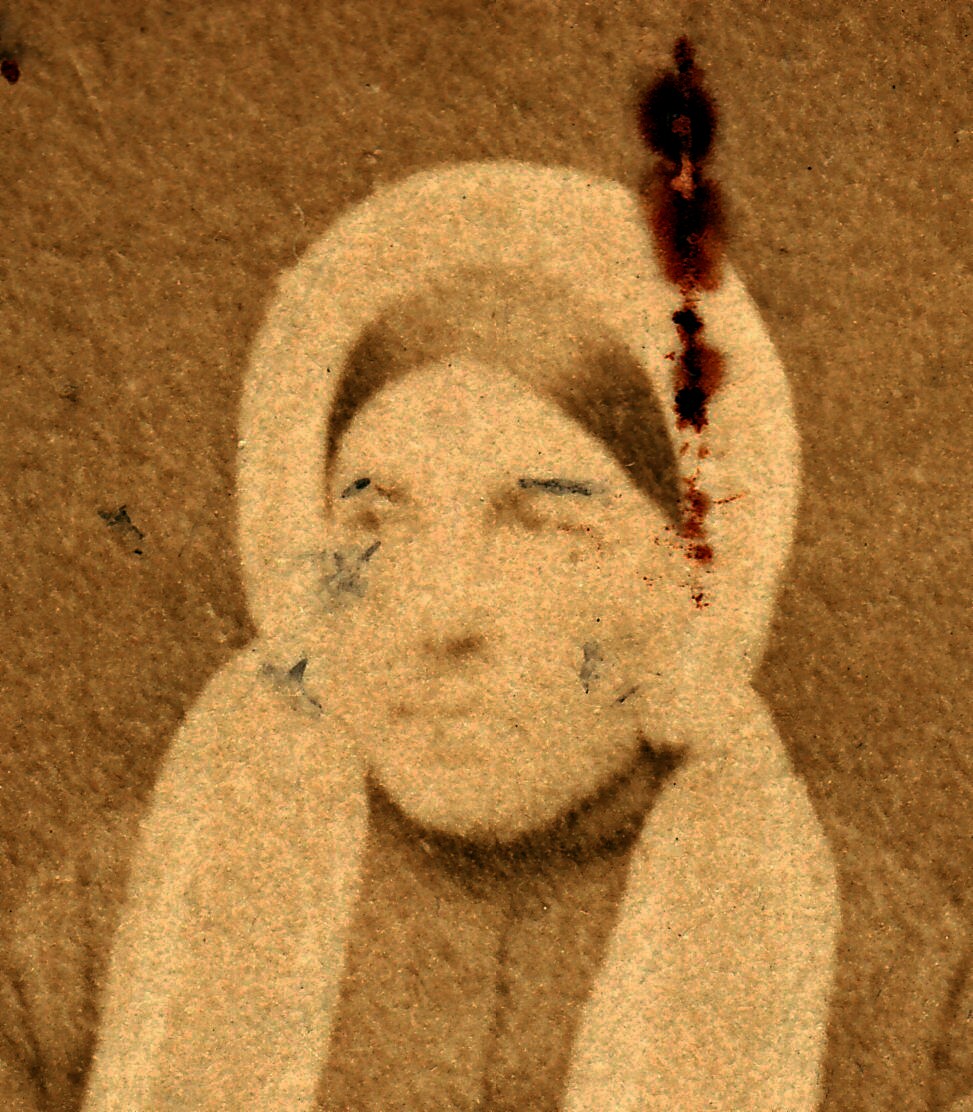
Letitia Blennerhassett.
Original and light-adjusted detail from above.
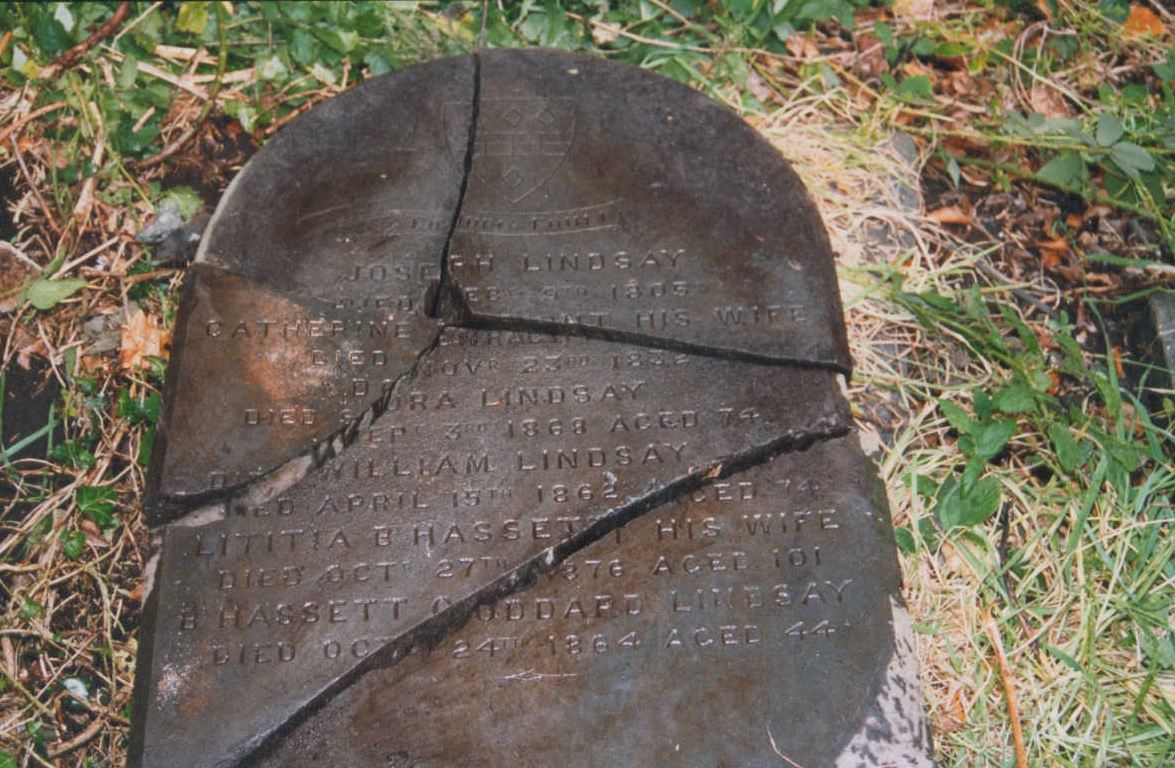
Grave of Letitia Blennerhassett,
Aghavallen church, near Ballylongford,
Co.Kerry.
Photo 1990.
Could this Letitia Blennerhassett be
our "Letitia Blennerhassett"
who was the mother of George Cashel?
Consider these reasons why this story makes sense:
- The psychology of the background fits:
- Our
George Cashel
was born Co.Kerry, 1807, Catholic.
- Our family remembered
that his mother was a "Letitia Blennerhassett".
- This Letitia Blennerhassett is
the only known Letitia Blennerhassett of that time
in Co.Kerry.
- She is one of twin girls who were
the youngest (perhaps indulged?) children of a vicar.
- Her mother might have died young.
Her father may have enjoyed his drink.
He was known as "Port Wine Jack".
- Her father
was chaplain to the Kerry Militia.
Her sister Elizabeth married in 1791 to an officer, Capt. Edward Fuller.
- She married in 1799 at 19 (very young) to another officer, Major Richard Ponsonby.
- Richard Ponsonby was already part of her circle.
His brother
William Ponsonby
was married to the widow of Capt. Edward Fuller's brother.
- Richard Ponsonby has an inheritance of £4,000
which Letitia will inherit if he dies.
And yet later we find he dies and she apparently does not inherit it.
- Letitia's vicar father
died early 1804 when she was 23.
- Her husband Richard was said to be
"too fond of his wine".
- An affair in 1806 fits:
- She perhaps has an affair in 1806 leading to the
birth of George Cashel in 1807 (her age 27).
- Ponsonby cuts her off?
Ponsonby had a huge inheritance,
but later we see Letitia is not well off,
and her daughters by Ponsonby
are living with Ponsonby relations, without her.
Maybe she was disgraced?
The Ponsonby girls in the 1820s still have their inheritance.
Louisa Ponsonby
does not even consider her mother Letitia when settling her estate in 1825.
-
Did Letitia have an affair with Cashel (child born 1807)
while still married to Ponsonby (died 1811),
and then did Ponsonby
cut her off from any money,
and take custody of the children,
who retained their inheritance?
- To be precise, Richard Ponsonby has an inheritance of £4,000
which Letitia will inherit if he dies.
But he dies in 1811 and she apparently does not inherit it.
[Case, 1852]
seems to show the initial plan as follows.
When Richard dies,
Letitia gets
£2,000, and the two daughters get £1,000 each (given to them at age 21).
Then when Letitia dies, the daughters will divide up
her share ("reversionary interest",
a further £1,000 each).
But Letitia outlived one daughter (and probably both).
-
But it is unclear that Letitia did inherit £2,000.
The 1820s deeds about Letitia's daughter
Louisa
say she has inherited £2,000
(and her marriage settlement says she has £3,000).
And the marriage settlement of Letitia's other daughter
Mary
says she has
inherited £2,000.
-
[Case, 1852]
says this is a mistake, that
Louisa's marriage settlement assigned her money that was not hers
but belonged to her mother.
Is this (and the daughters living with their uncle)
the result of Letitia having an affair?
- Interestingly, there is a settlement
at exactly the right time for Letitia to be having an affair:
The 1806 deed.
It is unclear what
this deed means.
It refers to their marriage settlement of 1799, and the inheritance of £4,000
(which comes from the Ponsonby side).
It may be that this is Letitia getting disinherited
for having an affair.
That she cannot inherit this money but Ponsonby's children can.
-
The 1806 deed sets up a modest yearly sum of £40
to be paid to Letitia's brother.
This payment is unexplained.
It may be that Ponsonby and Letitia are separating,
and he is setting up a modest payment for her so she will not starve,
to be paid to her brother as her guardian.
-
Interestingly, the
notes of
Rev. Thomas Enraght Lindsay
say that Letitia
"had an income settled on her of £100 per annum".
This sounds like the payment here.
-
No Ponsonby divorce bill is found
before his death.
-
Letitia Lindsay
says that her father
Thomas Rupert Lindsay
said there was some scandal, and Letitia was
"drummed out of Ireland".
- She is listed as Letitia Ponsonby at 2nd marriage,
NOT Letitia Cashel.
i.e. She did not marry Cashel.
(Maybe Cashel was also married.)
- Cashel must be Catholic.
- At George Cashel's baptism his mother might be listed as
Letitia Ponsonby.
- She gives up the Cashel child, to be raised Catholic by its Cashel relations,
and goes to the big city (Limerick) to avoid scandal.
-
Letitia was very fertile, but there is an unexplained gap.
She had a steady succession of children with Ponsonby from 1801 to 1804,
but then no children are born before his death in 1811.
After she re-marries in 1811, she has a steady succession of children with Lindsay from 1812 to 1822.
The explanation for this gap must be that she and Ponsonby split up.
- Around 1809,
Sara Harnett,
step-daughter of Richard's brother
William Ponsonby
(and niece of Letitia's sister)
marries without her stepfather William's approval to a Royal Navy officer,
and she is disowned by the family.
- The profile of her 2nd husband fits:
- After her (perhaps estranged) husband dies 1811, she is free to marry.
She marries again in Limerick city in 1811
to her late husband's employee,
William Lindsay,
a much younger man (her age 31, him age 21).
They are both from Co.Kerry
but they marry in Limerick city.
-
[Joseph Lindsay, 1897]
explains her going to Limerick
by the fact that she lost the government house that came with Richard's job in Tarbert.
But why Limerick? Why not Tralee, where she was from, and where there would be Blennerhassett relations.
- William started working under Richard Ponsonby in Mar 1805,
when he was age 15 and Letitia was age 24.
He might have fancied her for years.
- William worked under Ponsonby from Mar 1805
until Ponsonby's death in Apr 1811.
Even if Letitia was expelled to Limerick in 1806-07, he would still have known her before she went.
- William is a step down in class from the wealthy Richard Ponsonby of the big house.
He is merely a boatman, a young employee of Ponsonby.
Richard and Letitia are the same class as
Leslie of Tarbert House,
while
William is the son of Leslie's agent or steward.
Maybe, after the scandal, Letitia had no hope of securing a husband from her own class.
- William's father is dead
and so can't stop his 21 year old son
marrying a 31 year old woman with a past.
- Her daughter later gets pregnant outside marriage:
- In 1825, Letitia's daughters by her 1st marriage,
Louisa
and Mary
Ponsonby,
are
living with their uncle William Ponsonby.
Their father is dead, but they do not live with their re-married mother.
- Shortly before 1825,
Louisa,
on reaching age 21,
"sold her interest in the £1000 [inheritance] which
she was entitled to".
This sounds like she is being irresponsible with her inheritance,
without parental supervision.
- Then in 1825, Letitia's unmarried daughter
Louisa Ponsonby
falls pregnant in a great scandal.
Like mother, like daughter?
It is a bit of a coincidence that I am looking for a Letitia Blennerhassett
who maybe had an affair,
and I find one whose daughter had an affair.
-
Why does Letitia not come to help her daughter in 1825?
Louisa's
father is dead. She is living with her uncle William Ponsonby, without her mother.
Her mother is alive and in Co.Kerry.
Why does she not appear to help?
Why is Louisa alone?
The simple answer would be that Ponsonby won't have Letitia in the house.
Letitia is not allowed come to Crotto.
- To see this, imagine there was no scandal back around 1806.
Letitia and Richard Ponsonby were happily married. He died. She re-married.
Letitia and William Ponsonby are quite friendly.
Louisa is living with her uncle for innocent reasons - because he has a huge house, for example.
Then as soon as Louisa gets pregnant, her mother would rush down to Crotto to help, or Louisa would go to her.
It makes no sense for Louisa to be alone and distressed in Crotto for so long without her mother.
It would make sense if there has been a family rift
and William Ponsonby won't allow Letitia in the house.
- And Letitia does care - Louisa ends up living with her later, after falling out with her uncle.
- Louisa won a case to keep her inheritance,
perhaps because she was over age 21
and her father was dead,
and, unlike the case with her mother,
no one could disinherit her.
- Letitia's disgraced daughter Louisa came to live with her at Tarbert by 1829.
Maybe Louisa would be sympathetic towards George Cashel as a result of her experience.
- Her family are all linked to the police, which George Cashel then joined:
- Letitia's nephew
Richard Ponsonby
(born 1795)
was a
policeman from 1823.
- Letitia's 2nd husband William Lindsay
was the brother of
Thomas Lindsay
(born 1794)
who was a
policeman from apparently at least 1824.
- Letitia's daughter
Mary Ponsonby
married June 1828
to
William Miller, chief constable of police
at Listowel, Co.Kerry.
-
Letitia's possible son
George Cashel (born 1807)
joined the police in Sept 1828.
- She is linked to one of the candidates for "A.Blennerhassett J.P.":
- When
George Cashel joins the police in 1828
he is recommended by
"A.Blennerhassett J.P."
- None of the three candidates for
"A.Blennerhassett J.P."
are close blood relations to this Letitia
(all are only distant cousins).
However,
Arthur Blennerhassett, of Blennerville
married a 1st cousin of Letitia's mother in Sept 1799,
his marriage settlement was witnessed by Letitia's brother,
he was a J.P.
and died in 1839.
If she is our Letitia, then he is
a likely candidate for
"A.Blennerhassett J.P."
- We also have
"Arthur Blennerhassett, of Tralee, gentleman, attorney at law"
who witnessed the marriage settlement of Letitia
in June 1799.
If she is our Letitia, then he is
definitely a likely candidate for
"A.Blennerhassett J.P."
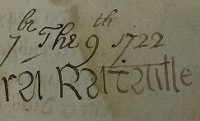
- Arthur Blennerhassett of Tralee in 1799
and
Arthur Blennerhassett of Blennerville
seem like they should be the same person.
However,
their signatures appear different.
- Her policeman son-in-law got into trouble
at exactly the same time as her possible policeman son:
- Mary Ponsonby's husband
William Miller
was suspended from the police in 1829, had charges brought against him,
was jailed for debt in 1830,
and dismissed from the police in 1830.
- Both of Letitia's daughters got involved with unsuitable men who caused a scandal.
Like mother, like daughter?
- The very same person who handled the minor disciplinary action against
George Cashel in Sept 1829
- Major William Miller, Inspector General for Munster -
also handled the major disciplinary action against
(Cashel's possible brother-in-law)
William Miller
in Dec 1829.
- Major William Miller dealt with some complaints about our William Miller in 1828.
- In Sept 1829, Major William Miller
wrote to the
Chief Secretary,
Lord Francis Leveson-Gower,
recommending that George Cashel be allowed to remain in the police.
- In Dec 1829, Major William Miller
wrote to the
Chief Secretary,
Lord Francis Leveson-Gower,
recommending that our William Miller be suspended from the police.
- If this is our Letitia,
did she have any contact with her son
George Cashel
over the many decades they were both alive?
(She died 1876. He died 1882.)
His branch certainly remembered the name "Letitia Blennerhassett"
and used Blennerhassett as a family name.
- If this is our Letitia,
she was actually alive when some of her
Sheahan
and Cashel
and Cashel
great-grandchildren were born!
She was alive when her great-granddaughter
Agnes Cashel
was born!
- If this is our Letitia,
then my ancestors never lived at
the surviving
New Ballyseedy
or
Blennerville House.
Rather, my ancestors lived at
Ballycarty
and
Old Ballyseedy
and
Castle Conway
(all in ruins)
and
Tralee Castle (demolished 1826)
and
Tralee Rectory (demolished 1995).
- Letitia's grand-nephew
James Franklin Fuller
wrote an account of the
Trial of Rowan Cashel
in 1901-04.
His grand-aunt was Letitia Blennerhassett,
who may have had an affair with a Cashel.
There are also some odd connections that may mean nothing:
- Letitia's brother-in-law was
William Carrique Ponsonby
(brother of her 1st husband).
- There is only
one other Letitia Blennerhassett in Ireland
at this time
- this one is in Co.Limerick.
- Curiously, when
William Carrique Ponsonby
marries
Honoria Wren in 1814,
he becomes the brother-in-law of
the other Letitia Blennerhassett too!
To be precise, Honoria Wren's sister married
John Blennerhassett,
brother of the Co.Limerick Letitia Blennerhassett.
- Around 1852,
Joseph Lindsay
was renting from this
John Blennerhassett
or his son.
- Honoria Wren's mother is of the Leslie family
of Tarbert,
who
William Lindsay's father
worked for.
- In fact, Honoria Wren's mother would have lived in the very same house,
Leslie Lodge, near Tarbert,
that William Lindsay later lived in.
- The Rowan family
is linked to Blennerhassett, Leslie and Cashell.
- Sir Edward Leslie's
1st cousin
Mary Rowan
married Rev. Edward Day,
who was apparently Rector of Tralee 1751-55 and 1758-60,
and their son Rev. James Day was Rector of Tralee 1805-18.
So Letitia, the daughter of Rev. John Blennerhassett,
Rector of Tralee 1765 to 1803,
would be the same social class,
and would know Leslie's relations,
and would no doubt have visited
Tarbert House.
- "Mahony" is a common name,
but still this is interesting:
Arthur Blennerhassett
(the future 3rd Baronet, and maybe the man who recommended
George Cashel
for the constabulary in 1828)
married a Catholic, Sarah Mahony of Blennerville, Co.Kerry, in 1826.
Cashel's first posting was under Chief Constable
Darby Mahony (born Cahir, Co.Tipperary)
in 1829.
William Lindsay
may have married an Anne Mahony in 1840.
Blennerhassett Lindsay
may have sp the Catholic baptism of a John Mahony of Tarbert in 1853.
- William Lindsay
was the brother of
George Lindsay,
who married the grand-dau of the
1st Earl Mount Cashell.
(No known connection with the Cashell surname though.)
- George Lindsay married his wife without the consent of her guardian in 1829.
- Letitia's nephew
Thomas Harnett Fuller
eloped in 1832
to Glasgow to marry his wife
without her father's consent.
- Letitia's apparent grandson
Edward Francis Cashel
(bapt 1840)
signed up in 1861 to fight for the Union in the American Civil War.
- Letitia's twin
Catherine Blennerhassett
had a grandson,
Blennerhassett Cotter
(born 1839 or 1840, would be 2nd cousin of Edward Francis Cashel),
who signed up in 1862 to fight for the Union in the American Civil War.
Letitia in
[Foster's Royal Descents, 1886].
Letitia in [Burkes Irish, 1976].
I've actually known about this Letitia and her two husbands
since the very start of this hunt in 1985.
But only recently have I started to really believe she is the one.
Letitia on
my website in 1999.
- She was married to Ponsonby from 1799 to 1811.
(George Cashel was born 1807.)
- When Ponsonby dies in 1811, she does not marry Cashel
but rather another man.
- The above two reasons are why I discounted this Letitia at the start of this hunt in 1985.
She seemed accounted for.
- There is no mention of CASHEL in any Blennerhassett, Ponsonby or Lindsay material.
- There is no mention of PONSONBY or LINDSAY in any Cashel material.
- After such a scandal in Tarbert,
Letitia does not stay away but rather returns to Tarbert to live for the rest of her life.
- Letitia's 2nd husband
William Lindsay
is even made a Church Warden in the parish church in Tarbert in 1818-19.
Lesser reasons (perhaps easily explained):
- Letitia's son
Joseph Lindsay
never mentions any scandal,
and writes as if nothing happened other than Ponsonby died and she re-married.
-
Rev. Thomas Enraght Lindsay
says that after Ponsonby's death in 1811,
"His widow and daughters moved to Limerick city".
But he may be just assuming that she has the daughters with her.
- None of the three candidates for
"A.Blennerhassett J.P."
are particularly closely related to this Letitia.
But (see above)
Arthur Blennerhassett, of Blennerville
is connected to her.
The notes of
Pat Lavelle
show the mother of
George Cashel
as a Letitia Blennerhassett.
Pat probably got this information from
her mother
Agnes Cashel (died June 1958)
or her aunt
Alice Cashel (died Feb 1958).
Alice Cashel certainly knew about the Blennerhassett connection.
See argument between Alice Cashel and Jim Sullivan.
Thomas Blennerhassett of Gortatlea
writes to
Pat Lavelle
and says Letitia "must have been"
the daughter of the famous
Sir Rowland Blennerhassett, 1st Baronet.
He does not provide any evidence for this.
Did he say this because of some half-remembered story that there
was a daughter?
Or does he have no idea, and is Sir Rowland just the only 18th century Blennerhassett he has heard of?
It is clear from the wider letter
(see
p.1
and
p.2)
that
he
knows little about the family history.
There is no evidence that Letitia is the daughter of Sir Rowland.

Pat incorporates the error that Letitia is the daughter of Sir Rowland
(incorrectly written "Sir Ronald").

We see here in Pat's notes
the original family story of a romantic runaway marriage
(which may itself not be true),
mixed in with the error that Letitia is the daughter of Sir Rowland.
In the above notes, Pat
remembers Alice Cashel
and Jim Sullivan (died 1935)
arguing (sometime before 1935)
over whose family had a claim to the
Blennerhassett estate near Tralee.
That is,
Ballyseedy.
(Even then it may have been clear that the Blennerhassett line owning Ballyseedy was
going to die out.)
Alice had her Blennerhassett ancestors
(one would love to hear what evidence she presented),
and
Pat said that Jim's family
the Sullivans came from near Tralee,
and he maintained that the old castle belonged to his family
(the ancient Clan O'Sullivan).
However, none of this makes much sense.
Jim's
Sullivans
were in fact from the Killarney area.
And Ballyseedy
was a Desmond castle.
And if the above Letitia is ours, Alice's ancestors are more from
Castle Conway in Killorglin
than from Ballyseedy near Tralee.
Possibly neither of them knew what they were talking about.