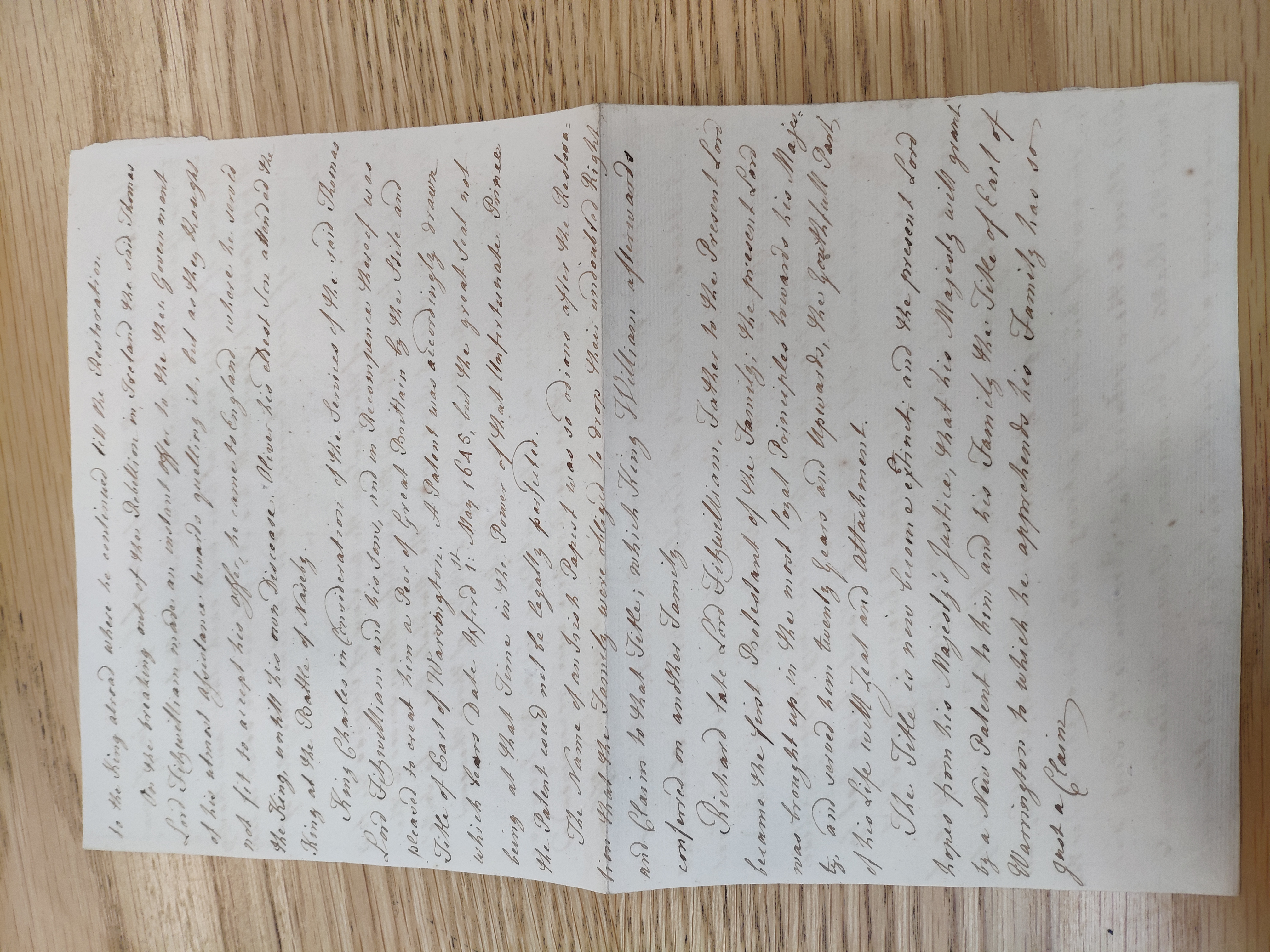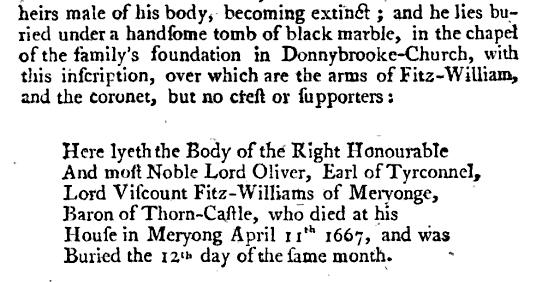
Oliver Fitzwilliam, 2nd Viscount Fitzwilliam, and 1st Earl of Tyrconnel.
Irish Confederate Wars, 1641 to 1653:
Like his
father, he was both Catholic and Royalist.
Loyal to Charles I
during English Civil War
(the
Irish Confederate Wars 1641 to 1653).
He
returned to France with his brother
as his Lieutenant 1642.
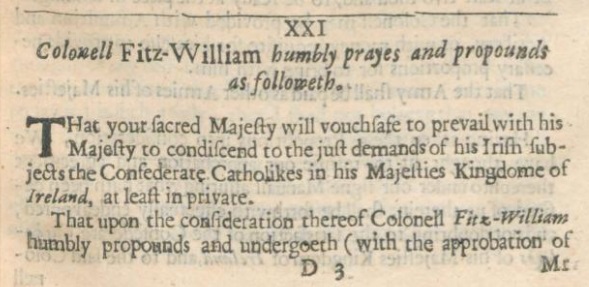
In 1645 he tried to get the
Confederation of Kilkenny
to support Charles I in the English Civil War, on the grounds
that their Catholic demands would be met.
He fought with the Confederates
against the Parliamentarians 1645-1646.
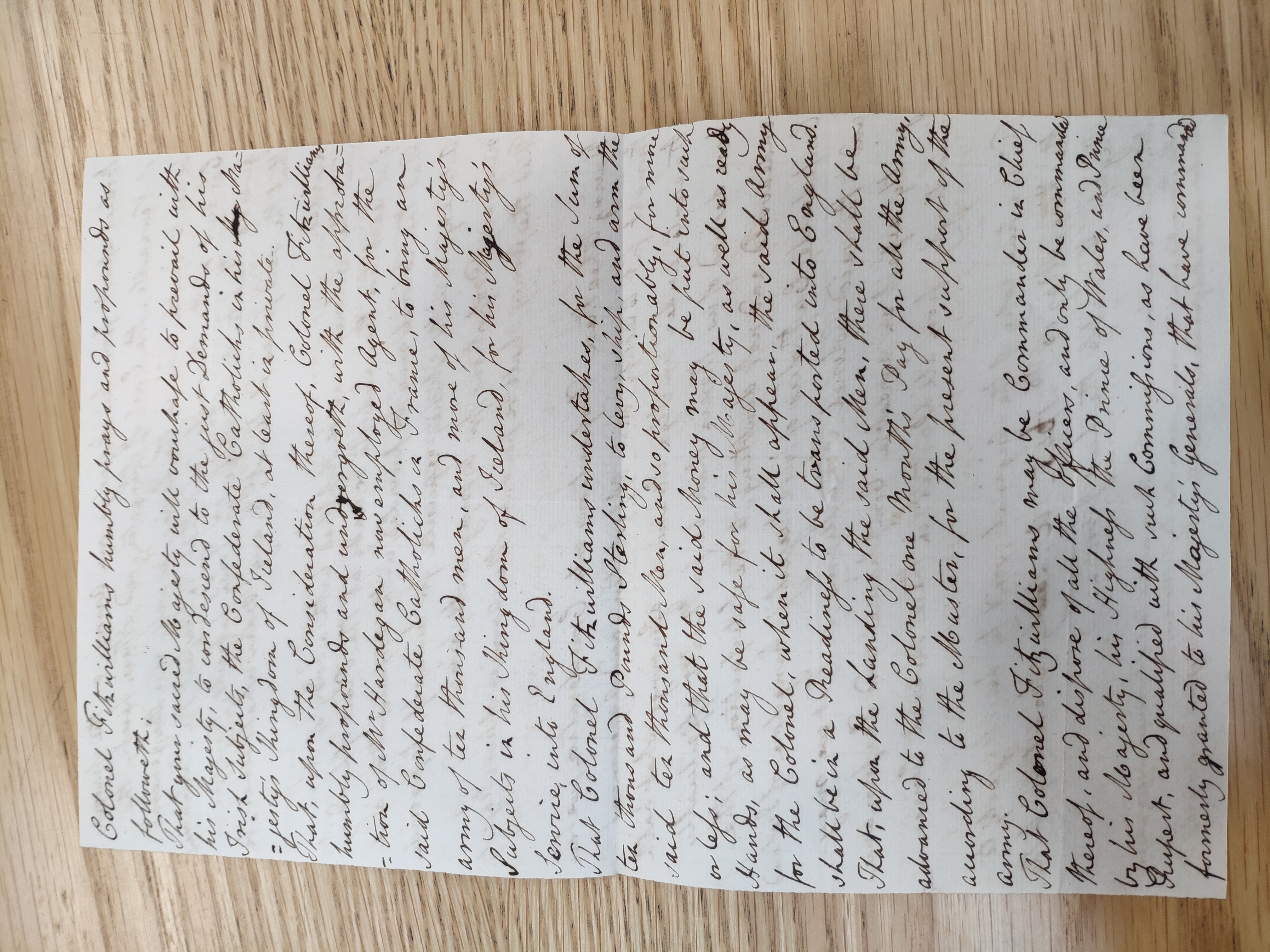
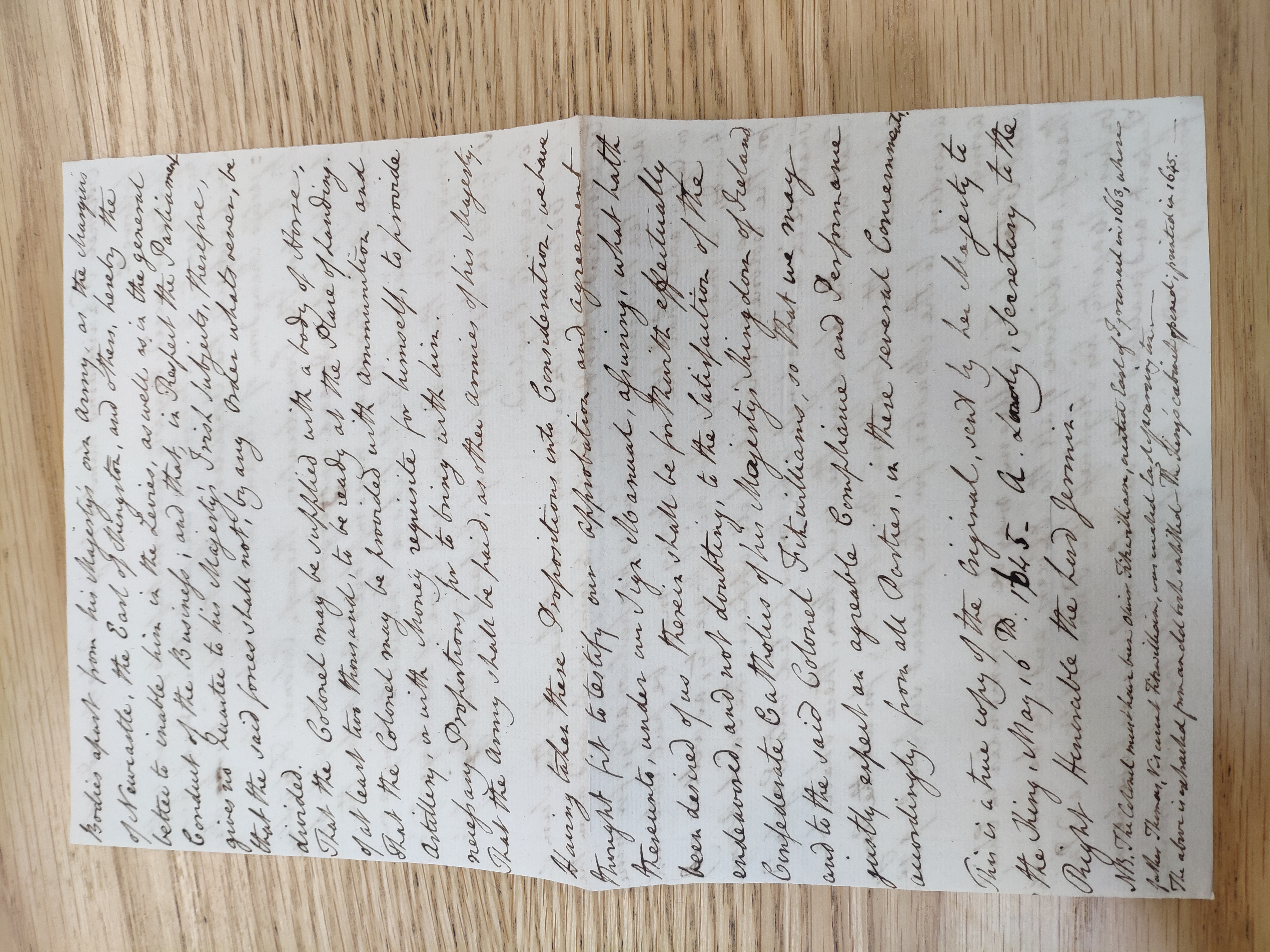
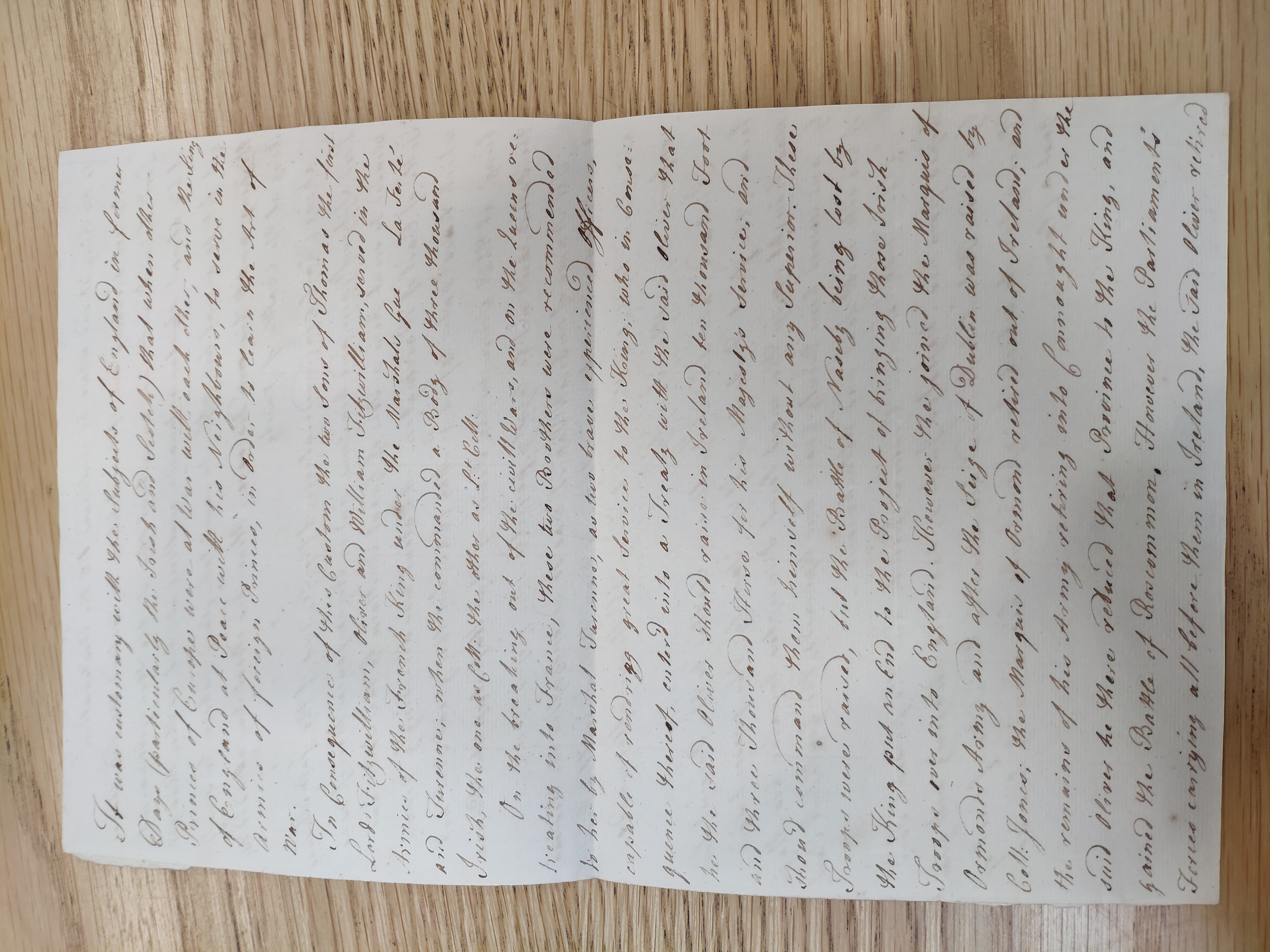
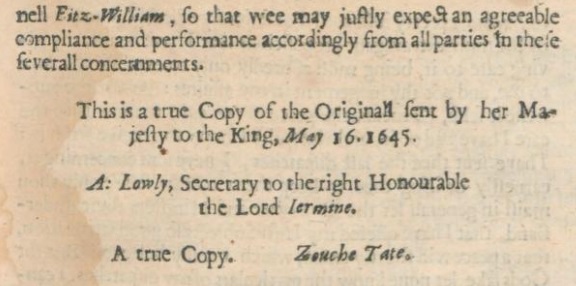
Captured correspondence of May 1645
shows he promised the King that
if funded he would train an army of 10,000 Irishmen for him,
and lead that army into England.
This plan was agreed,
but defeat at the
Battle of Naseby, 14 June 1645
(in which Fitzwilliam fought)
put an end to it.
He was
Lieutenant-general
in 1643-1647 period
under the 1st Duke of Ormonde
(then the 1st Marquess of Ormonde).
He
served under his relative, the Irish Confederate leader
Thomas Preston, 1st Viscount Tara,
in Connaught 1646.
Carried out
successful assault on Roscommon Castle,
Co.Roscommon in 1646, which
secured Connaught for the King.
The Irish Confederates fell out with the English Royalists
as it became clear their Catholic demands would not be met.
Fitzwilliam stayed loyal to the King and parted with the Confederates.
The
Parliamentarians
conquered Ireland, final surrender in 1653.
Oliver
succ as 2nd Viscount Fitzwilliam c.1655.
[Down Survey, 1655-58]
shows Col. Oliver Fitzwilliam, Irish Papist,
as owner of Dundrum and Ballinteer.
He
had mixed fortunes
under the Parliamentarians.
Arrested by them twice,
but in favour at other times.
He was
in danger of losing his lands,
but recovered them at the Restoration.
Attended the
influential
Rota Club
debates
run by
James Harrington
in London 1659-60.
Created Earl, 1661:
Restoration
of the monarchy
1660
saw him rewarded for his loyalty.
He was
created Earl of Tyrconnel
(or Tyrconnell)
by Charles II
on 20 Apr 1661
[Complete Peerage].
NOT 1663.
He was
restored in June 1661 to his father's lands, including Baggotrath and Donnybrook.
Took his seat (by proxy)
in the Irish House of Lords
9 July 1662.
Grant re-affirmed 1666 to him of
Dundrum, Merrion, Baggotrath, Donnybrook (the mill only), Simmonscourt, Ringsend, Little Bray,
Kilmacud, Thorncastle, Booterstown, and other lands.
On the second storey of Merrion Castle,
the arms of the family
were engraved in stone
[Ball, vol.2, 1903].
Attended on his deathbed by Fr. Bernard Doyle, Catholic priest
of Booterstown.
See
[Lyng, 2000].
He
died at Merrion Castle, 10 Apr 1667.
Earldom extinct.
He was
bur 11 Apr 1667
in black marble tomb
[now vanished], Fitzwilliam chapel,
Donnybrook church.
Will pr 1667.
Eleanor was buried in St. Mary's Church,
Nottingham, 11 April 1681.
She was buried with her father the 1st Earl of Clare and
her brother the 2nd Earl of Clare.
See monument
here
and here.
Her will pr 1681.

Entry for 2nd Viscount in a list of the peerage in 1660.
It has him inheriting his father's unrecognised title of Earl of Warrington.
He has not been created Earl of Tyrconnel yet.
This is from the
catalogue of nobility,
in the unnumbered pages just before the index of
A chronicle of the kings of England (1660 edn)
by Sir Richard Baker.
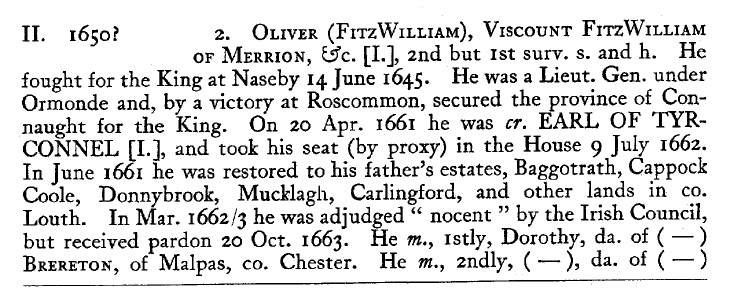
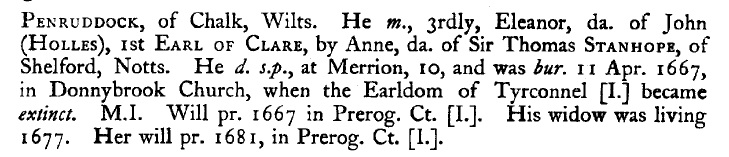
2nd Viscount in
[Complete Peerage].
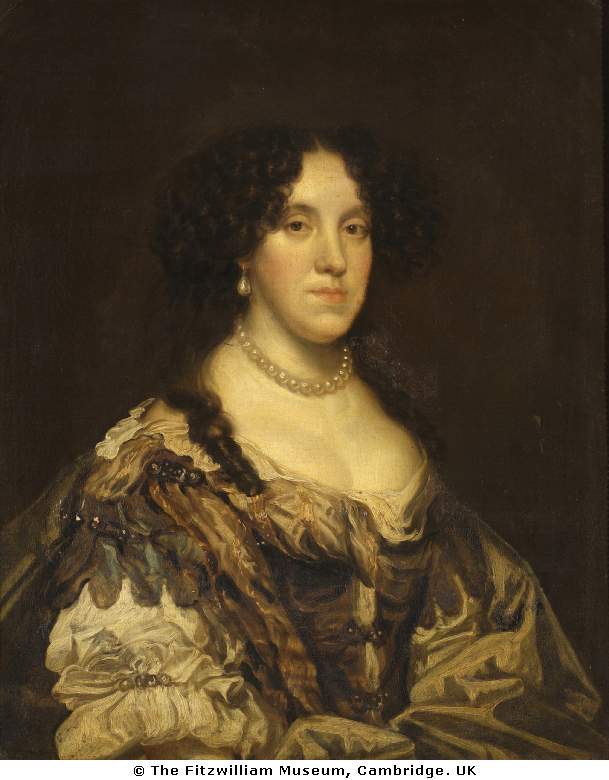
Eleanor Holles, c.1670-1680.
By unknown (formerly ascribed to Sir Peter Lely).
Used here with the kind permission of the
Fitzwilliam Museum, Cambridge.
Please donate to support this site.
I have spent a great deal of time and money on this research.
Research involves travel and many expenses.
Some research "things to do"
are not done for years, because I do not have the money to do them.
Please Donate Here
to support the ongoing research and
to keep this website free.